You Can't Be Revived
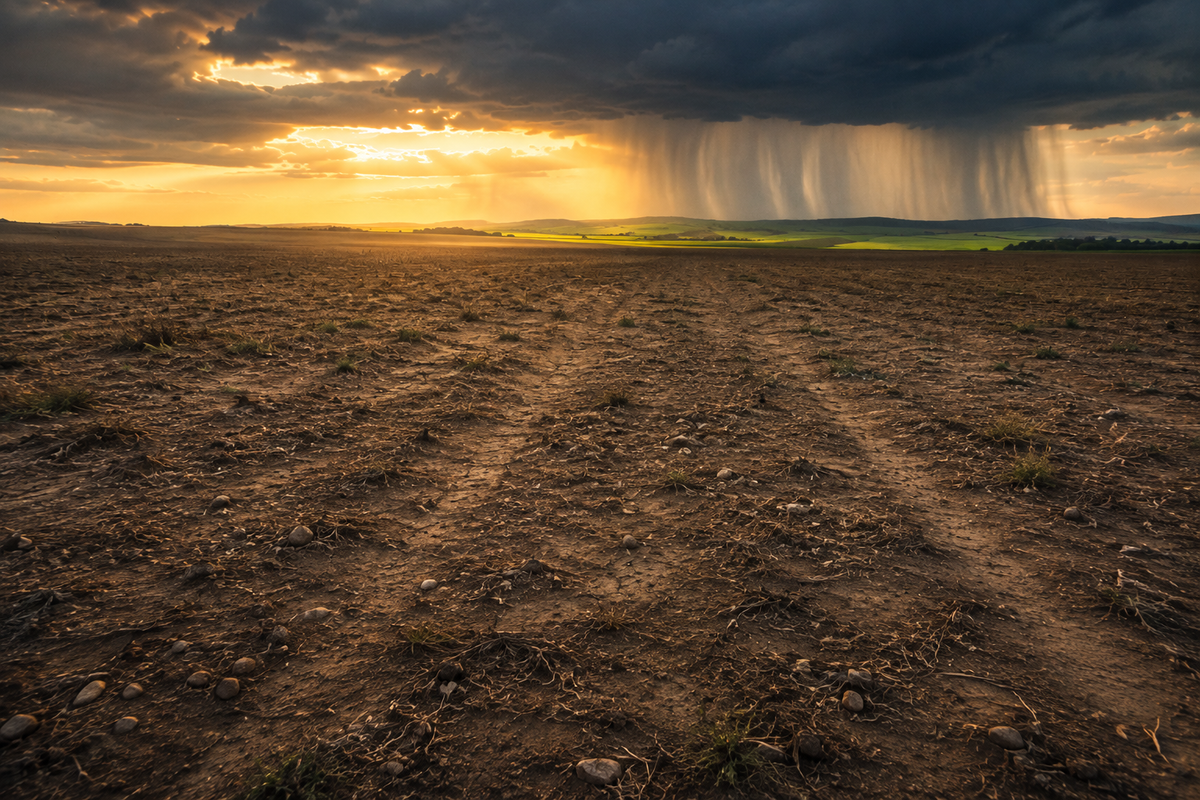
Why the prayer you keep praying was never about you.
There's a sign in a church yard I pass sometimes: REVIVAL. EVERY NIGHT AT 7. Underneath it has two dates, a beginning and an ending, four days apart.
Somebody ordered that sign. Somebody picked the dates.
I'm not mocking them. The people who fill that building are likely very sincere, and most of them are hungry for God. But look at what the sign is claiming. It says that revival can be scheduled, that it runs ninety minutes, and that it concludes on a specific day.
We put a word on a sign without ever stopping to ask what that word means.
To revive is to bring back to life. That's the whole definition. You don't revive something healthy, or tired, or discouraged. You revive the dead.
Paul uses the word without any of our softening. "And you were dead in your trespasses and sins." Then, a few lines later, God "made us alive together with Christ."
Dead. And then, alive.
That's revival. Not the atmosphere in the room when it happened. Not what your face did. The corpse stood up.
And notice the tense. Made alive. Completed action, already finished, done to you while you had no vote in the matter. Paul isn't describing a season you enter and exit. He's describing the single moment when a dead man became a living one.
This all leads somewhere uncomfortable, so let me just say it.
If you belong to Christ, you have already been revived.
It happened once. And there isn't a second one waiting for you at some altar on a particular night of a scheduled meeting. You can go forward every night that week and revival will not be on offer. Because revival is for the dead. And you are alive.
Before you come after me, I know there are things God gives His people. But we've stuffed them all under this one same word.
He strengthens. He corrects. He wakes up believers who've been asleep at the wheel for a decade. He restores what sin has hollowed out. And each of those is very real. And if you need one, or more, of them, ask Him for it. You don't have to wait for the revival meeting, ask Him now.
He just doesn't call those things revival. He has other names for them. We are the ones who took the word for resurrection and stapled it to a four-day meeting.
Hosea watched this happen in real time. In chapter 6 the people sing what sounds exactly like a modern revival prayer. Come, let us return to the Lord. He'll heal us. After two days He'll revive us. It's confident, corporate, and beautifully phrased. You could put it on a screen, with a soft pad underneath, and nobody would blink.
God's answer comes in the next breath. Your devotion is a morning cloud. It's dew. It's gone by nine.
The song was fine. The singing was fine. It burned off in the heat of day, and He said so out loud.
Here's how I think we got here.
God poured Himself out somewhere. People wept, they fell down, they confessed things they'd hidden for years, and then they walked out of the building different. The room was electric, full of emotion, charged, and exciting, because something enormous had just happened in it.
Then we took that reaction and named the whole event for that one moment.
That's the error, and it's small enough to miss. The weeping was a response. The falling was a response. Real responses to a real God, and I'm not throwing them out. But we took the label off the resurrection and stuck it onto a room.
And with the room labeled, we could easily reproduce the room.
So now a meeting that runs more than one night is a revival. The word survived. The dead men walking out alive did not.
Paul saw the containment problem coming and wrote instructions for it.
In 1 Corinthians 14 he asks what happens when an outsider walks into your service and everyone is speaking in tongues. His answer is blunt. The man will conclude that you're all insane.
But pay attention, Paul doesn't shut it down. He reorders the room. Let prophecy go out instead, he says, so the unbeliever hears something he can understand, gets convicted, has the secrets of his heart laid bare, falls on his face, and says God is really among you.
Read that list of outcomes. Every single one happens to the man who walked in lost.
Paul organizes the most charismatic gathering in the New Testament around the person in the room who isn't saved yet. The manifestations aren't a display for insiders. They were aimed at the outsider the whole time, and Paul is willing to muzzle the most spiritual thing happening in that building if it gets in the man's way.
Turn that inward and it curdles fast.
A movement receives something genuine. People come from everywhere to be near it. And then, somewhere in year three, being different becomes the evidence. The strangeness that used to be a byproduct is now the product. Access becomes the discipleship. Getting in becomes the only goal.
Nobody decides to do this. It's just what happens when the room stops being aimed at anybody outside of it.
And the world watches all this and reaches the conclusion Paul predicted in verse 23. They think we've lost our minds. Not because the gospel offended them, because we were doing something incomprehensible in front of people we never intended to explain it to. And then we call their confusion persecution.
So here's the part I actually want to land on you, and I mean you specifically, not the leadership of some ministry you've got opinions about.
You will drive for four hours, stand in line for three. You'll pay the gas, and hotel, and for tickets. And you'll pray for revival in your city, with real tears on your face. And you'll mean every word.
All the while, there's a man who lives two doors down, whose name you know. You've known for six years that he doesn't know Jesus. You've talked to him about his truck. You've watched his kids grow up.
And never once, not one time, have you said anything to him about the only thing that would actually revive him.
You drove past him to go pray for revival.
That's the whole thing. That's the entire problem in one sentence, and no amount of atmosphere in that auditorium is going to fix it, because what you're asking God for is standing in his own driveway on a Saturday, and you won't cross the grass.
Revival has an output, it has to. If the word means dead people coming alive, then the measurement is dead people who are now alive. And that's something countable with names attached.
So count.
Six months after the meeting you loved so much, who came alive? Don't count who attended, or who cried, or even how you felt on the way home. Who was dead in trespasses and sins before they came, and is alive in Christ now? And can you say their name out loud?
If the answer is nobody, no matter what happened in that room, it wasn't revival.
I know that's a hard measurement. It's supposed to be. We've spent years measuring this by how it feels because that is the only metric that never embarrasses us.
I'm not telling you to stop going. Go. Ask God to strengthen you, wake you up, break whatever's gotten hard in you. He does that. And He's generous about it.
Just finish the sentence.
Revive us so that...what? Every prayer in Scripture for God's power on His people has a purpose clause hanging off the end of it. Ours usually stops at the feeling. Fill me so I can feel You. Move here so I can see it.
There's no verb after the encounter.
Hosea supplies the verb four chapters after the song.
Sow to yourselves in righteousness, reap in mercy, break up your fallow ground, for it is time to seek the Lord till He come and rain righteousness upon you.
Same prophet. Same people. The ones who sang about being revived get handed a plow.
Fallow ground is good land. That's the part we too often skip. It produced once, and it's been sitting long enough to go hard on top. There's nothing wrong with the soil. But nobody's worked it.
That's the honest description of most of us, and it's the reason the strengthening you're asking for is available even though revival isn't. Dead ground needs resurrection. Hard ground needs a blade run through it.
Then look at the order He gives. Break the ground. Sow. And then the rain comes.
The rain is the only part of that sequence nobody was assigned. It's also the only part anyone talks about. We've built a whole culture around traveling to wherever the weather is. And Hosea puts the believer's job on the front end of the verse, in the dirt, before anything falls out of the sky.
Revival preachers used this text for two hundred years to send people digging through their own sin, and that is in there. Keep it. Just don't stop there. Because a plowed field isn't the goal either. You break ground so something can grow, and what grows gets harvested and eaten by people who are hungry.
Sow in righteousness. Reap in mercy. Neither one of those is a crop you consume yourself.
So finish it. Ask Him to strengthen you so you can go get somebody. Then go. Get somebody. And let the strengthening be judged by whether you went.
Start with one name. You already know it. You thought of them while reading this.
Have the conversation this week. It'll be awkward. You'll do it badly. And it will still be the most spiritual thing you do this month.
That sign is still up. REVIVAL. EVERY NIGHT AT 7. And everyone who walks through those doors will already be alive.
The people it's actually for won't be there.
You know where they live.