Stop Welcoming the Holy Spirit
The Branding Reflex
If Pentecost happened today we would have a name for it by Tuesday. The Upper Room Experience. The Jerusalem Outpouring. And before the week was out we’d have a logo.
By month two a worship album would be released. And a conference would be announced, with a track titled “Hosting the Fire.” Churches would fly teams to Jerusalem to study the room and its layout for duplication here in the states.
Was it the prayer posture? The time of day? Where did the “leaders” sit? Can we create a small group curriculum on how to replicate ‘one accord’?
We’d spend years studying and attempting to recreate what the Spirit did in a single moment. And would miss the entire point of what happened next.
The disciples did not stay in that room. They left. And everywhere they went, the Spirit showed up again, but it never looked the same twice.
The Production Problem
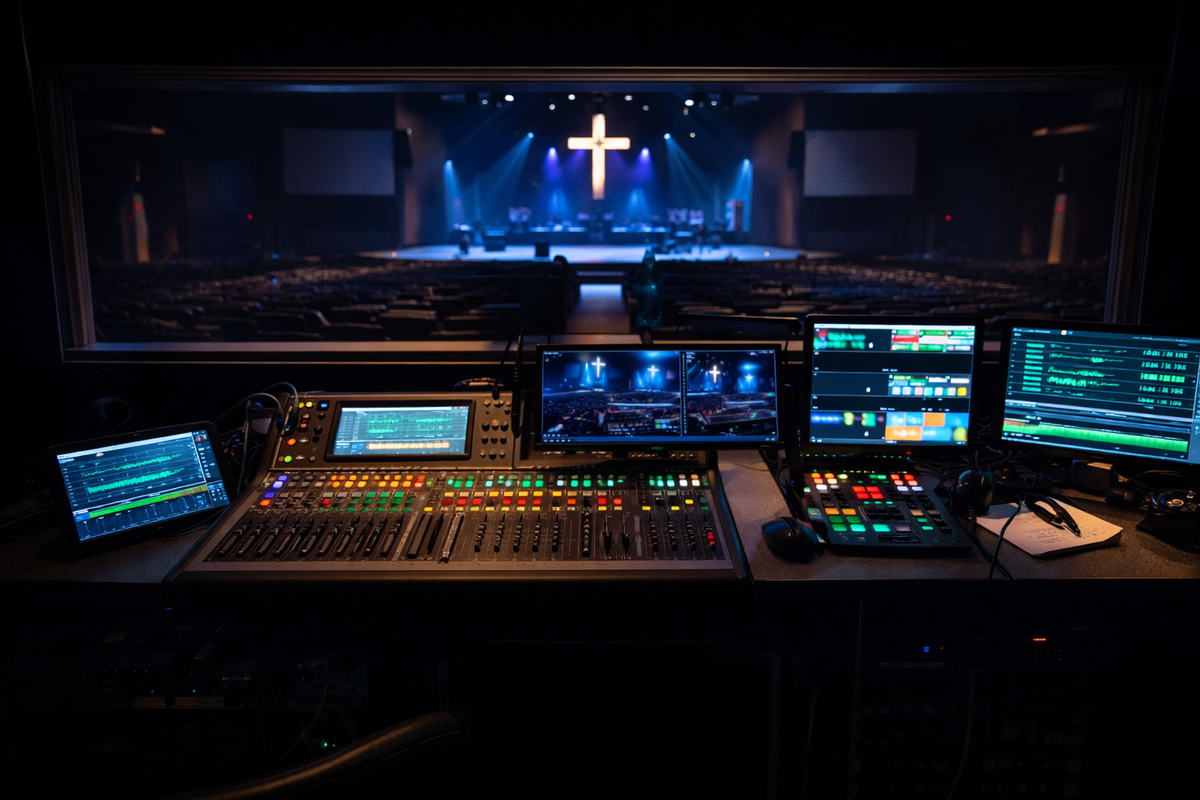
Evangelist, Mario Murillo, famously says we don’t need big screens, skinny jeans, or fog machines. We just need an encounter with the Holy.
And he’s completely right. It sounds funny at first. ‘Skinny jeans’ gets a laugh, but there’s something more powerful in what he’s saying.
When the laughter fades you are left with a question. What exactly are we producing on Sunday mornings?
Fog machines, light rigs, and carefully curated set lists all have something in common. If the Holy Spirit didn’t show up, the service would still feel roughly the same. The band would still build to the bridge at the right moment. The lights would still drop on cue. The room would still swell.
You’d still feel the same emotions.
That’s how you know it’s manufactured. Not because the tools are evil, but because the experience doesn’t depend on God to function. The whole thing is self-sustaining by design. Every variable is controlled.
That’s not worship planning. That’s risk management.
Fear vs Feeling
We’ve replaced the fear of the Lord with emotion and tried to convince everyone they are the same.
But they are not.
Biblical fear of God isn’t a feeling you can generate with a key change or well-timed lighting cue. It’s recognition. You are standing in front of something that could utterly unmake you, yet it chooses not to. That’s not an experience you walk into voluntarily. It’s one that stops you in your tracks.
Emotion fades in the parking lot. Fear of the Lord follows you home.
Modern worship culture has mostly replaced the fear of God with admiration of God. And admiration is much easier to produce. It responds to atmosphere and can be manufactured with a good song, a dim room, and a speaker who knows how to land the phrase.
A TED Talk has the ability to produce admiration.
But look at what happens in Scripture when people actually encounter God. Nobody applauds or sways. The consistent response to the presence of God is some version of collapse.
Not swaying with hands raised. Collapse.
We aim for ‘moved’ when the biblical precedent is ‘wrecked’.
The Throne Room
Isaiah chapter 6 shows us what happens when a man who realizes he is wholly unclean finds himself standing in the presence of holiness. That tells us everything about us and, at the same time, everything about God.
He never planned to be there. He didn’t attend a conference or sign up for the 7 a.m. prayer track. His day was interrupted by the living God. And his response? Not celebration.
It was utter terror.
Followed closely by confession and then commissioning. In that specific order.
“Woe is me, for I am ruined.” That’s not the cry of a man in a modern worship experience. It is someone discovering himself in the light of Who God truly is.
And notice what Isaiah didn’t do. He didn’t go back to the throne room. He didn’t try to recreate that experience, for himself or for others. He didn’t write a curriculum about it.
He went out. He was sent.
That’s the pattern. Encounter produces deployment. Not a return visit.
The Invitation We Got Backwards
We spend more time telling the Holy Spirit He is welcome to join us in the environments we create, than seeking Him out in the ones He creates.
We set the agenda. We build the set list. We script the transitions. We plan the altar call. Then someone prays, “Holy Spirit, you’re welcome here,” as if we’re doing Him a favor.
Welcome. Like a guest at our event.
Isaiah didn’t welcome God into his schedule. He was wrecked by an encounter he didn’t initiate and couldn’t control.
There’s a structural problem buried in how most churches approach a Sunday morning. The order of service exists before anyone prays. The songs are chosen, the sermon is outlined, the transitions are all rehearsed. Then Sunday morning someone prays, “Lord, have Your way” over a program that’s already locked.
Have Your way … within this 72-minute window we’ve allotted.
The lights, the songs, the planning, none of that is the problem. The problem is they are decided before anyone asks God what He wants to do. We build the house our way, then invite the owner to come live in it.
That’s not inviting the Spirit to lead. That’s inviting the Spirit to attend.
The Spirit Keeps Moving
After Pentecost, the Spirit showed up in Samaria. Then at Cornelius’s house. Then in Ephesus. And every time it looked different. Nobody tried to replicate the upper room.
The Holy Spirit kept moving. And the people followed.
That’s the opposite of what we do today. We find the place where God moved and build a monument. Then a conference. Then a brand. Then we staff it, program it, and market it until whatever God had originally done is buried under layers of institutional scaffolding.
Jesus Himself rarely performed the same way twice. A finger in the ear one day. A word from a distance another. Touch. Command. Silence. There’s no formula because it was never about the method.
It was always about the Person.
And the Person will not be systematized.
Permanently Altered
A genuine encounter with the holiness of God leaves a mark. Not a memory.
Isaiah could not unsee what he saw. Moses came down the mountain with a face glowing so bright he had to cover it. Jacob walked with a limp for the remainder of his life.
These are people who were permanently altered by proximity to God.
And we settle for goosebumps.
The fog will clear and the lights come back up. The band will play their outro and yet the question will remain. The question we keep avoiding. When the production ends, does anything remain?
If the answer is no, we have not encountered God.
Instead of an encounter that pleases God, we’ve just attended a carefully curated experience about Him.
The churches are children playing on the floor with their chemistry sets, mixing up a batch of TNT to kill a Sunday morning.
It is madness to wear ladies' straw hats and velvet hats to church; we should all be wearing crash helmets.
Ushers should issue life preservers and signal flares; they should lash us to our pews.
For the sleeping god may wake someday and take offense, or the waking god may draw us out to where we can never return.
— Annie Dillard (Teaching a Stone to Talk)