Jesus Never Voted
"Christians, I challenge you: Don't vote next Tuesday."
That was a post I saw recently in my feed. The argument went like this:
Jesus never told His followers to elect better rulers. He told them to feed the hungry, welcome strangers, and love their enemies.
His kingdom is not of this world. When the crowd tried to make Him king, He walked away. So the most Christlike thing you can do on election day is stay home and go feed somebody.
The argument is tidy, and it came with chapter and verse attached. And, on one of its points, it is right.
Jesus never voted.
Neither did Peter, or Mary Magdalene, or Zacchaeus, or any of the five thousand on the hillside. Judea was a Roman province run by a governor its people never chose. Caesar wasn't elected, and Pilate didn't answer to the people of Jerusalem.
Jesus never told His followers to vote for the same reason He never told them to renew their driver's license. It just wasn't a thing in their world.
You can't build a doctrine on Jesus' silence about something the people in the room could not do.
Take a look at the verses used for that post:
"My kingdom is not of this world," Jesus told Pilate. And in the next sentence He explains what He meant: "If My kingdom were of this world, My servants would fight, so that I should not be delivered to the Jews" (John 18:36).
He's talking about the sword. His kingdom doesn't advance by force. Peter had learned that a few hours earlier, when Jesus healed the ear Peter cut off.
A ballot is one of the least violent ways people have ever found to decide who governs them.
The crowd in John 6 was coming to "take Him by force to make Him king" (John 6:15). Same issue. They had just eaten their fill, and they wanted a king who'd keep the baskets coming while running Rome out of Judea. And Jesus refused to be made into something that small.
That passage is about Who He is. It says nothing about whether you should vote.
And the original post's strongest verse: "Render therefore to Caesar the things that are Caesar's, and to God the things that are God's" (Matthew 22:21).
That one cuts the other way.
The Pharisees thought they had Jesus cornered. "Is it lawful to pay taxes to Caesar, or not?" Say yes, and the crowd hears a collaborator. Say no, and Rome hears a rebel.
So Jesus asks for a coin. "Whose image and inscription is this?"
"Caesar's."
Then give Caesar what's his.
Think about who was standing there. An occupied people, taxed by a pagan emperor whose own coins called his father a god. And Jesus told them Caesar had a legitimate claim on something.
Paul carried the same thread to Christians living in Rome itself, with Nero on the throne: "Render therefore to all their due: taxes to whom taxes are due, customs to whom customs, fear to whom fear, honor to whom honor" (Romans 13:7).
Here's the part the original social post skipped.
In Rome, Caesar was one man.
In America, the Constitution opens with three words: "We the People." Rome gave that authority to one man. This country splits it among all its citizens. You live under the government, and you also hold a piece of it.
So "render to Caesar" lands on you differently than it landed on a fisherman in Capernaum. Part of what Caesar is owed is the work of governing. Your share of that work happens in a voting booth.
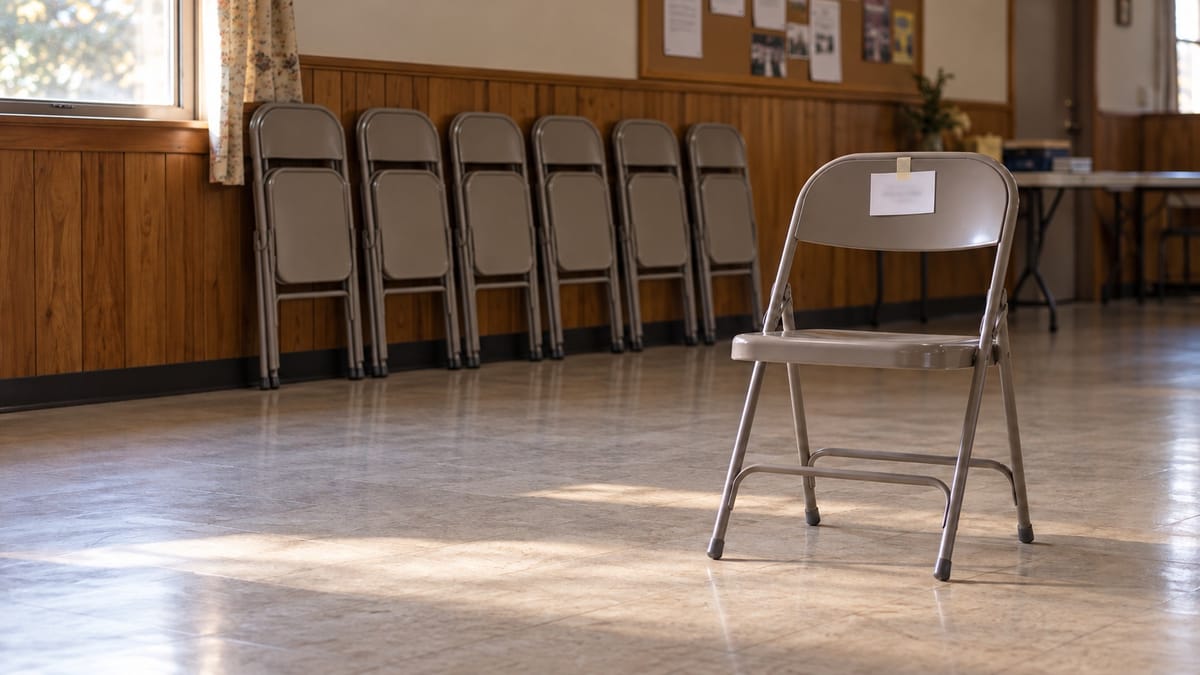
In a republic, you have a seat at Caesar's table. Leave it empty, and the people who showed up decide without you.
Jesus paid what was asked, as long as paying it didn't require sin. When the collectors came for the temple tax in Matthew 17, He made the case to Peter that He wasn't obligated, then paid anyway: "Nevertheless, lest we offend them..." (Matthew 17:27). He sent Peter fishing for the money.
He also left people in their civic roles. A Roman centurion commanded soldiers for the occupation, and Jesus praised his faith without a word about resigning (Matthew 8:10). Zacchaeus promised to repay fourfold anyone he'd cheated, and Jesus never told him to quit collecting taxes (Luke 19:8).
John the Baptist, the man Jesus said had no equal among those born of women, told tax collectors to "collect no more than what is appointed for you" and told soldiers to "be content with your wages" (Luke 3:13-14).
Do the job, and do it righteously.
Paul used his citizenship like a tool. Beaten and jailed in Philippi without a trial, he refused to be slipped out the back door: "They have beaten us openly, uncondemned Romans... Let them come themselves and get us out" (Acts 16:37).
Later, with his enemies planning to ambush him on the road to Jerusalem, he said four words that sent him to Rome instead: "I appeal to Caesar" (Acts 25:11).
Even the exiles in Babylon got this instruction, and they had no vote and no voice: "Seek the peace of the city where I have caused you to be carried away captive, and pray to the LORD for it; for in its peace you will have peace" (Jeremiah 29:7).
If captives were told to seek the peace of Babylon, you can spare an hour for your own county.
"Silence in the face of evil is itself evil: God will not hold us guiltless. Not to speak is to speak. Not to act is to act." - Dietrich Bonhoeffer
Now for the line from the original post that likely drew the most amens. Why spend a Tuesday on politics when you could be feeding the hungry?
Voting takes about an hour, often less. You'll spend longer than that Tuesday evening scrolling posts about the election.
The question assumes you have to pick only one. You can vote, go to your job, and still have time to help those in need. You'll probably vote on your lunch break, or right after work. If you still desire to do something specific for the poor that day, there are plenty of shelters that will take your volunteer time.
It's a distraction dressed up as compassion.
And the love-your-neighbor argument runs the other direction anyway. The people you're told to feed live under laws. Those laws decide whether the shelter keeps its doors open and who runs the schools their kids attend.
"When the righteous are in authority, the people rejoice; but when a wicked man rules, the people groan" (Proverbs 29:2).
In a republic, the people decide who's in authority. Your neighbor lives with that decision whether you helped make it or not.
Staying home can feel neutral, but it's still a choice.
The people you disagree with will show up Tuesday, cast their ballots, and have their say. If you sit it out, you are choosing to let them have their say alone.
Scripture never calls skipping an election a sin, and I won't either. But wrapping your absence in Bible verses just makes it a better-dressed absence.
There's a warning buried in that post worth keeping.
Caesar's coin carried Caesar's image. You carry God's: "So God created man in His own image" (Genesis 1:27). That's the second half of the verse, and it's the half that keeps you sane in November.
Caesar gets your vote. God gets you.
If Tuesday night's results decide whether you have peace on Wednesday morning, you've handed Caesar something that was never his.
And the person with the other candidate's sign in their yard is still your neighbor. If you've made them your enemy, then they are the enemy Jesus told you to love and pray for (Matthew 5:44).
So here's my challenge, since the post offered its own.
Vote Tuesday.
Pray for whoever wins (1 Timothy 2:1-2), the same way the early church prayed for emperors it never chose.
Then on Wednesday, go find somebody hungry and feed them.
Take your seat. It has your name on it.