The Zookeeper is You
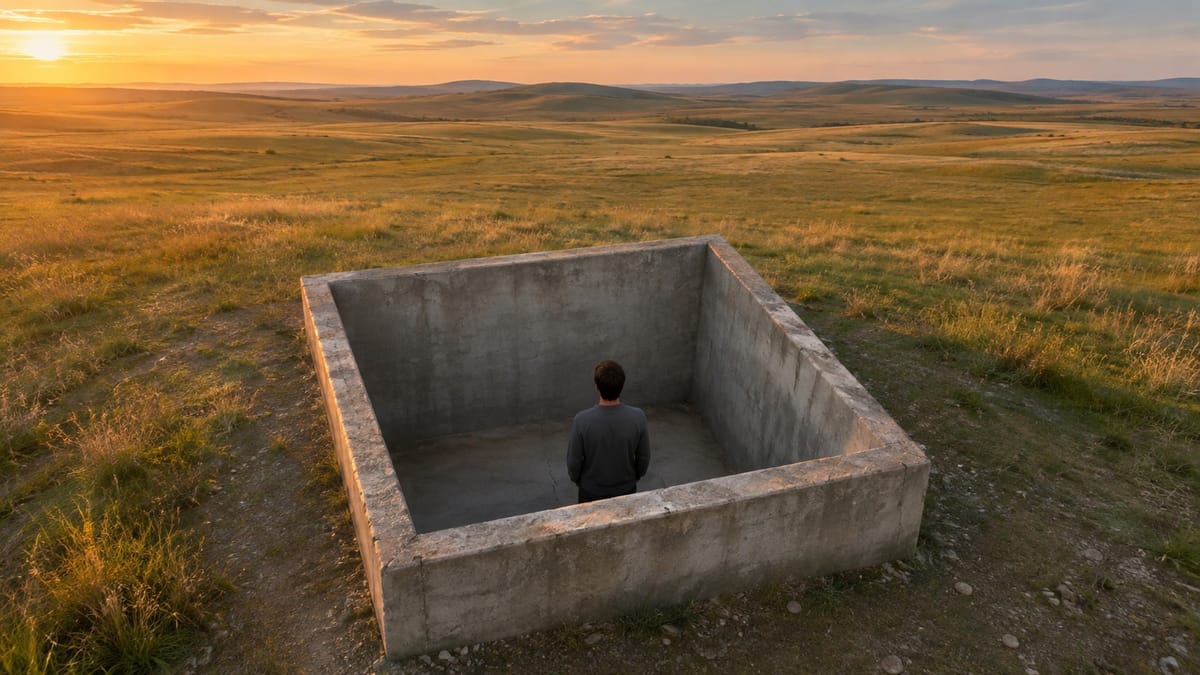
Several years ago I heard a pastor say something and I’ve not been able to shake it since. He said it feels like our churches have become zoos. We’ve domesticated the wild animals and trained them to remain content sitting in their cages, while they wait to be fed. And all the while not realizing they were made for so much more.
It’s a good line. And most hear it and nod, because they assume the indictment is aimed at the institution or the leadership.
But I’d argue that it’s not. Or, at least, not entirely.
There’s an animal in the African savanna called an Impala and it is one of the most athletic creatures on Earth. An Impala can jump ten feet straight up, and can clear thirty feet in a single leap. This should make the animal impossible to contain.
But zoos keep Impalas behind walls barely three feet tall. And it works because of one simple fact: If an Impala can’t see what’s on the other side of the wall, it won’t jump. It doesn’t matter that it has the ability or that the barrier is laughably small. If the destination is not visible, the Impala stays put.
The limitation is not the wall, it’s the animal’s vision.
Churches didn’t set out to build enclosures. Most began with good intentions; to provide community, to teach the Word, to create a space for encounter. But over time the structures meant to support a mission became the mission itself.
Sunday morning became the product, and programs became the ecosystem. While attendance became the measure of health.
And the congregations all adapted.
That’s what happens to any living thing in a controlled environment. You stop hunting when someone feeds you on a schedule. You stop running when there’s nowhere to go. And you stop leaping when the barriers block the view of what’s beyond them.
The enclosure doesn’t have to be tall. It just has to restrict your view of the horizon.
Give people enough structure, enough programming, enough scheduled spiritual activity and they will voluntarily stay inside a space they could easily walk out of. Not because they can’t leave, but because they’ve been trained to distrust anything not pre-verified, pre-approved, and pre-scheduled by someone else.
We don’t have to talk to the person at the bank, or the one next to us at work, because next week we are having a revival service at our church.
The writer of Hebrews puts it bluntly: “By this time you ought to be teachers, but you need someone to teach you the elementary truths of God’s Word all over again. You need milk, not solid food” (Hebrews 5:12).
That’s a zoo problem. Animals in the wild learn to feed themselves, they develop instincts, and they become dangerous.
The author of Hebrews is saying: you’ve been here long enough that you should be feeding others by now, but you’re still lined up at the trough waiting on someone to feed you.
Sunday morning has become the primary source of spiritual nutrition for most believers. One meal a week, prepared by someone else, served on a schedule. And if the sermon doesn’t “feed” them, they complain. Or they leave and look for a zoo with better food.
But the Bible was never meant to be something dispensed to you. The difference between a zoo animal and its wild counterpart isn’t access, it’s the ability to hunt.
Zoos have another problem, they breed animals that are unable to exist out in the wild. It’s an unintentional consequence.
The animals are healthy, they eat well, and they can reproduce. But they’ve never had to navigate a threat on their own. They’ve never had to find water in a drought, or been tested by anything real.
And churches have the same problem. We produce believers who function beautifully inside the building. They know the songs, serve on teams, and attend all the studies.
But put them in a breakroom conversation about suffering and they freeze. Place them in a cultural moment that demands theological clarity and they just parrot a bumper sticker. Let them experience a season of genuine spiritual warfare and they look for the next conference to attend.
Discipleship that only works inside the building is not discipleship.
It’s acclimation.
Good zoos try to simulate natural environments. They give predators a ball to bat around instead of prey. They hide food in puzzles so the animal has to work for it. Zookeepers call these enrichment activities.
They look like the real thing and can even produce some of the same behaviors. But they don’t prepare the animal for genuine encounters.
Churches have their own form of enrichment activities. Serving on the greeting team as a substitute for real ministry. A small group discussion guide as a substitute for genuine wrestling with Scripture. A mission trip as a substitute for talking to your neighbor. Volunteer hours instead of obedience.
None of these things are bad. Greeting teams matter. Small groups matter. But when these become the ceiling and not the floor, when they substitute for the wild behavior God designed, they become simply enrichment activity.
They keep the animal busy, but never allow it to learn to be dangerous.
So the question becomes, who built the zoo?
The easy answer is leadership, and there is truth in this. Pastors who build systems to create dependency instead of maturity carry real responsibility. When the model rewards attendance over deployment, when people are trained to consume rather than be sent, that is an enclosure built by leadership.
But here’s the thing that should make you uncomfortable.
The wall is three feet tall.
You could leap over it, any time you wanted.
The Impala doesn’t stay because the wall is high, but because it won’t risk the jump. And most believers don’t stay because they are trapped. They stay because the enclosure is predictable.
Someone handles the menu, the schedule is set, the expectations are manageable. You’re not a captive, you’re a volunteer.
Your pastor is not the zookeeper. You are.
You chose the cage, and you keep choosing it. Every Sunday you show up, consume, and leave unchanged.
You’re locking the door from the inside.
There’s a reason people feel stuck even when they’re praying for direction. They’re asking God to steer while they remain tied to the dock.
A ship’s rudder only works when the ship is moving. While they are docked the steering can be turned as much as you want, and nothing happens. The mechanism requires forward motion. Water has to be moving past the rudder for it to be effective.
Isaiah 30:21 says, “Whether you turn to the right or to the left, your ears will hear a voice behind you saying, ‘This is the way, walk in it.’”
Notice the verbs: turn and walk. Both imply movement.
The voice comes after you start moving, not before. God doesn’t hand you a map while you’re sitting in the harbor. He steers you once you’re underway.
This is the faith component the enclosure destroys. The zoo trains you to wait. To wait for the sermon that unlocks it, for the prophetic word that reveals it, for the conference, for the right feeling, for the certainty.
But certainty before obedience is the opposite of faith.
Hebrews 11 is a catalog of people who moved before they had answers. Abraham left his home without knowing where he was going. Moses walked away from Egypt. Noah built a boat, in a desert, when it had never rained.
The direction came after the departure. Not before it.
The impala won’t jump because it can’t see the landing. That’s the exact thing faith asks you to do.
The zoo is not evil, some people need a season in a protected environment. New believers need to be fed and trained. Wounded people need shelter. There is a time for the safety of the enclosure.
But it was always supposed to be temporary. Its intent is to rehabilitate and release, not a new lifestyle.
The church is essential. Community, rest, teaching, these are all real and ongoing needs. You were never meant to only be fed, though. You were meant to feed others. The problem begins when the church becomes the destination, rather than the launching point. When the thing meant to equip you for the wild becomes the reason you never enter it.
The goal was never to keep you comfortable, it was to get you healthy enough to survive in the open. To feed yourself, and to feed others. To jump without seeing the landing. To trust that the God who made you for the wild will be there when you land.
You were not made for a three-foot wall. You were not made for a weekly feeding schedule. You were not made for enrichment activities that simulate the life you were built to actually live.
You were made to jump.
The wall in front of you is shorter than you think and the voice behind you is waiting for you to move.
The only thing keeping you in the enclosure is the zookeeper.
And the zookeeper is you.